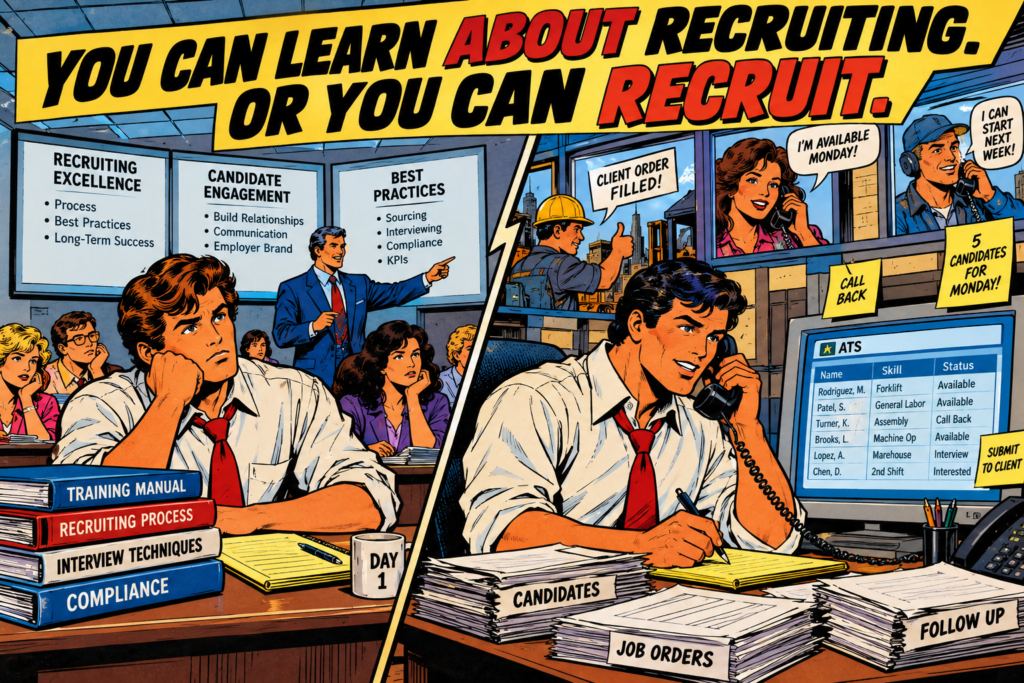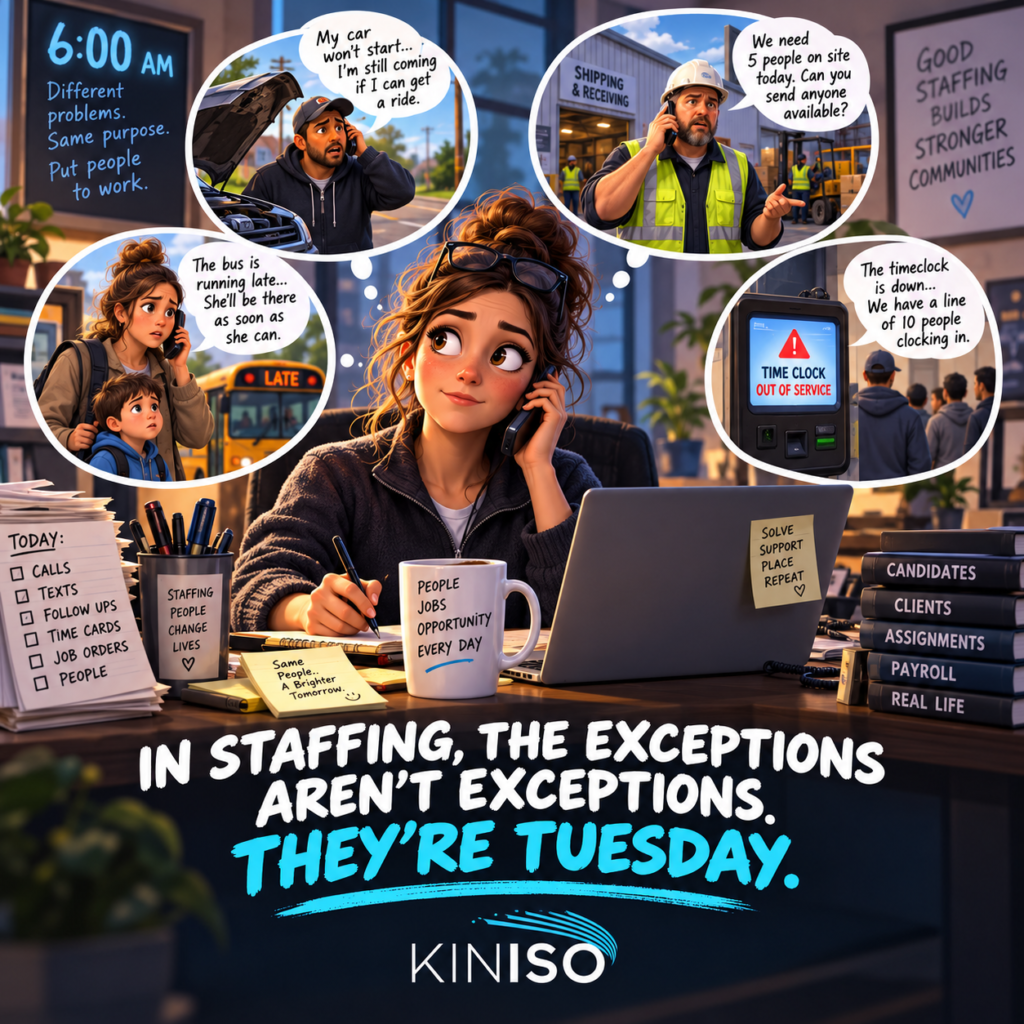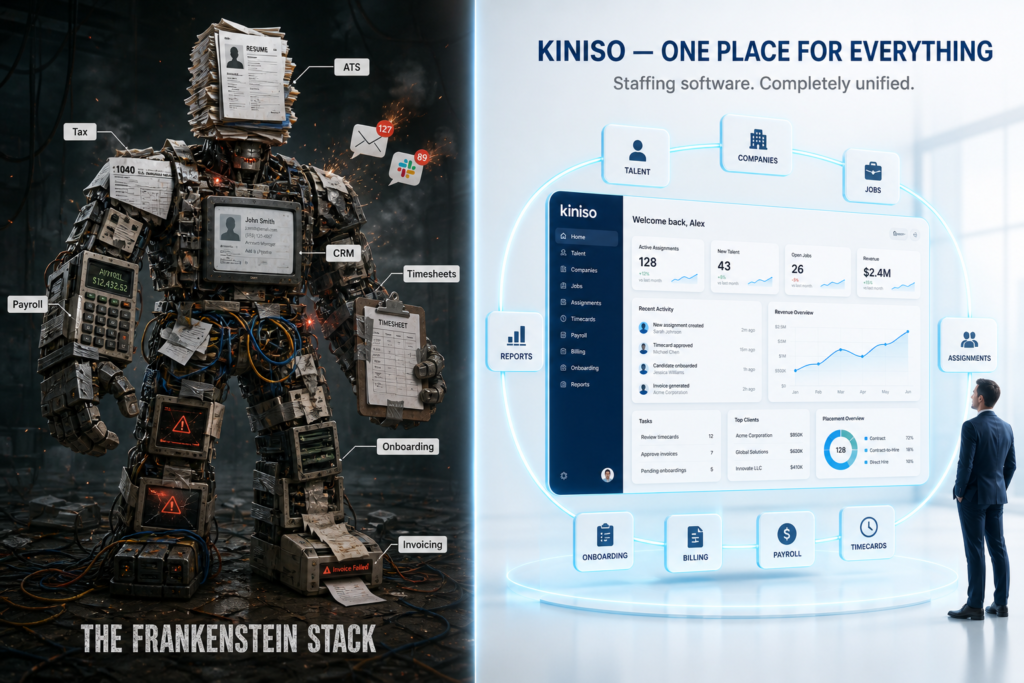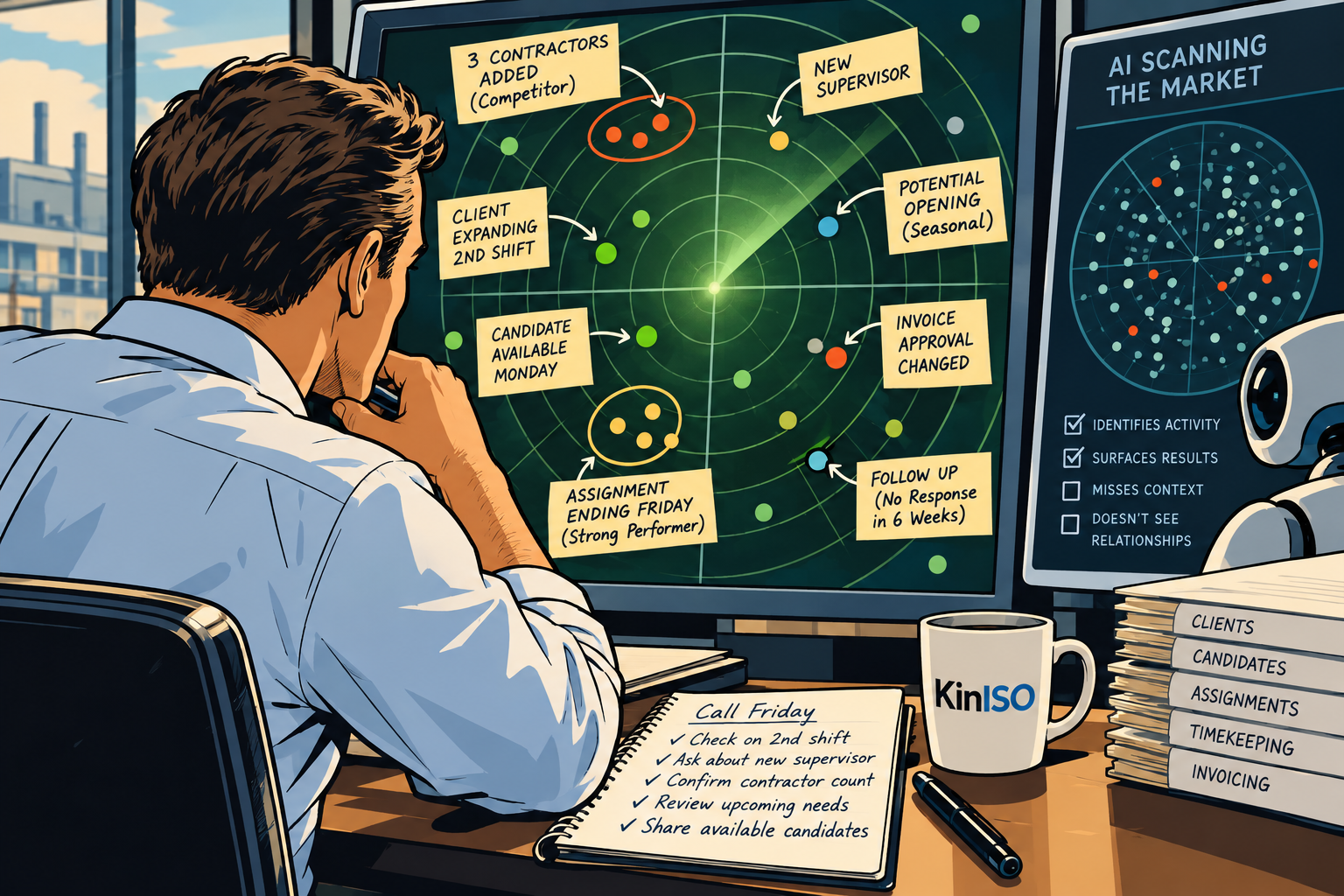
A lot of staffing technology is sold on the promise of saving time. AI can scan the market, summarize activity, and surface accounts, candidates, jobs, and trends faster than a person can review them by hand. That has real value. But there is a difference between seeing information and knowing what is going on, and in staffing, that difference decides who wins the order.
The salesperson who knows a client has struggled to fill second shift for three weeks has an advantage. So does the recruiter who remembers that a candidate just finished an assignment, has forklift experience, and can start Monday. So does the service manager who knows a competitor quietly placed three contractors at an account last month. None of that comes from scanning harder. It comes from having your head in the game.
Why Staffing Service Calls Still Matter
There is a reason good staffing firms build regular service calls into their operating rhythm. Call the client every Friday. Not because every client has something important to say every week, because most weeks they don’t. You make the call because two months can pass very quickly.
You may think you know what is happening at an account because you have worked with them for years. Meanwhile, another staffing company may have placed three contractors there since your last meaningful conversation. The client may have hired a new supervisor, production may have increased, someone may have quit, or a department that never used temporary labor may suddenly be short-handed. Your contact may not think any of this is worth a phone call.
But when you talk regularly, you hear it. Over time, those small pieces of information become market knowledge, and that knowledge is one of the most valuable things a staffing company owns.
The Same Thing Happens on the Candidate Side
Imagine a client tells you, “We might need two people next week.” There are two very different ways to respond. The first is, “Great. Let me talk to recruiting and see who we have.” The second is, “I have someone coming off an assignment Friday who has already worked in that environment. I also have two people on our available list who can work second shift. Let me verify availability and send you the best options.”
The second conversation feels completely different to the client. You aren’t reconnecting with your own business after they hand you a job order. You already know what is happening. That credibility comes from recruiters talking to candidates, salespeople talking to clients, and everyone sharing what they learn.
Recruiters should know who is available now, what those people have done, where they performed well, what shifts they will work, and when their current assignment ends. Salespeople should know that too. Not every detail about every candidate, but enough that when an opportunity appears, they are already halfway to solving the client’s problem.
Your Brain Is Still Part of the System
There is another benefit to staying actively involved in the work: you remember things. Human memory is imperfect, but that doesn’t make it useless. When you spend your week talking with candidates and clients, patterns develop. You remember that Acme usually increases headcount before the holidays. You remember that one supervisor loves a particular employee, and that another client requires a PO before anyone can start. You remember that a candidate said she could work weekends once her daughter’s soccer season ended.
Individually, those facts seem insignificant. Collectively, they are how experienced staffing professionals develop judgment.
That is why there is a risk in using AI primarily as a way to avoid engaging with information. If software constantly reads, summarizes, decides, and reminds for you, it can make you faster while making you less aware of the business around you. The goal should not be to eliminate thinking. The goal should be to eliminate the administrative friction that keeps people from thinking.
Attention Matters in the Staffing Back Office Too
The same principle applies when information enters your staffing software. Someone still has to pay attention. Client billing information has to be correct, onboarding documents have to be complete, and timecard approval rules have to be entered properly. Pay rates and bill rates have to match the agreement, and contacts need to be attached to the right accounts.
A small mistake during data entry can create hours of unnecessary work later. A missing invoice field can trigger another phone call. An incorrect approval contact can hold up payroll. A poorly entered client record can make reporting unreliable for everyone else. Sometimes the fastest way to operate is simply to get the information right the first time. That takes software that makes the right information easy to capture, and it takes people who are present enough to notice what they are entering.
Staffing Technology Should Make You More Aware, Not Less
The best staffing technology should not turn employees into people who wait for the system to tell them what to do next. It should help them understand the business better. Recruiting should be able to see what sales is hearing. Sales should be able to see who recruiting has available. Service should know what is happening on assignment. And the back office should not have to hunt through emails, spreadsheets, and disconnected systems to figure out what someone meant three weeks ago.
That shared awareness is part of what KinISO is designed to create. KinISO gives staffing companies one place to manage the information flowing through recruiting, sales, service, onboarding, timekeeping, and the back office, so everyone has a clearer picture of what is happening. The technology handles the organization. Your people still bring the judgment.
Because in staffing, one of the strongest competitive advantages you can have is still very simple: know your clients, know your people, and know what is happening.
Key Staffing Terms Defined
Service call: A regular, scheduled check-in with a staffing client to learn how assignments are going and what is changing at the account, whether or not there is an open order.
Job order: A client’s request for staffing help, including the role, number of people, shift, pay or bill terms, and start date.
Market knowledge: The accumulated, firsthand understanding of clients, competitors, and candidates that a staffing team builds through ongoing conversations. It usually lives in people’s heads and notes until a system makes it shareable.
Shared awareness: A state in which recruiting, sales, service, and the back office can all see the same current picture of clients, candidates, and assignments.
Staffing back office: The functions behind placement, including onboarding, timekeeping, payroll, billing, and compliance.
Bill rate: The hourly amount a staffing firm charges the client for a worker.
Pay rate: The hourly wage the staffing firm pays the worker. The difference between bill rate and pay rate funds the firm’s margin and costs.
Timecard approval: The client’s sign-off on hours worked, which triggers payroll and invoicing.
Frequently Asked Questions
What is staffing technology?
Staffing technology is software that supports the staffing lifecycle, including recruiting, sales, client service, onboarding, timekeeping, payroll, and billing. Good staffing technology reduces administrative friction and keeps information consistent across teams.
Why do staffing service calls still matter if I have software?
Software can only report what has been entered into it. Regular service calls surface things clients don’t think to mention, such as a new supervisor, a production increase, or a competitor placing contractors. Those details are often what lead to your next order.
How often should a staffing firm call its clients?
There is no universal rule, but a consistent rhythm matters more than a perfect one. Many firms use a weekly call for active accounts, such as a Friday check-in. Most weeks may produce little. The value is in not letting weeks turn into months without real contact.
Can AI replace staffing recruiters and salespeople?
AI can speed up scanning, summarizing, and drafting. It doesn’t replace the judgment that comes from talking to candidates and clients and remembering what they said. The risk is using it to avoid engaging with the information at all.
What data entry mistakes cause the most problems in staffing software?
The common ones are incorrect billing details, missing invoice fields, mismatched pay and bill rates, incomplete onboarding documents, wrong timecard approval contacts, and contacts attached to the wrong accounts. Each one tends to cost more time downstream than it would have taken to enter correctly.
How does KinISO help staffing teams stay aware?
KinISO keeps recruiting, sales, service, onboarding, timekeeping, and back-office information in one place, so each team can see what the others know. It organizes the information, and your people supply the judgment.