The concept of “overnight success” is a popular myth in the tech world. In reality, the most transformative platforms are often the result of decades of vision meeting the right technological moment. KinISO is a prime example of this journey. While the platform officially launched in December, its roots go back much further than the recent release date.
A Vision Decades in the Making
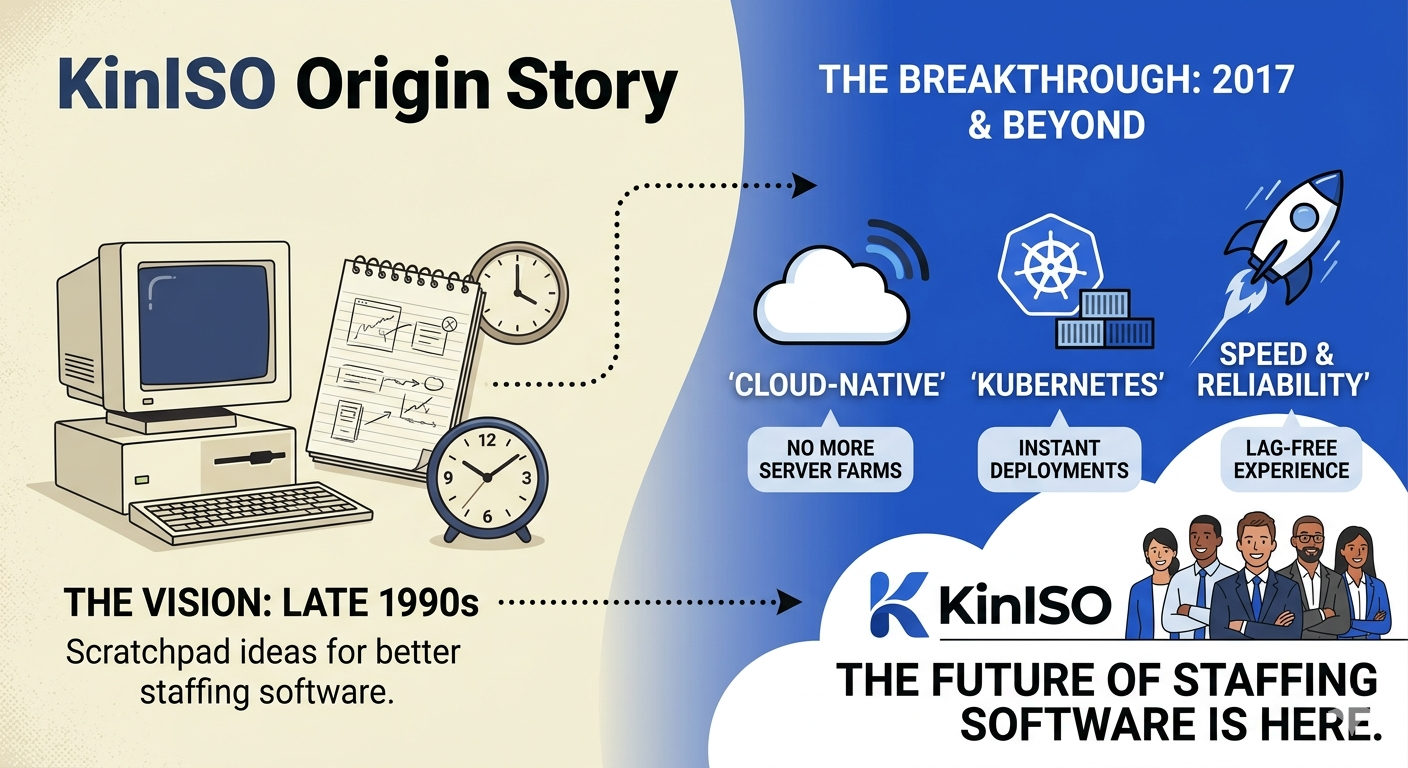
The story of KinISO didn’t start in a modern coding bootcamp; it started in the late 1990s on a scratchpad. The vision was clear: a more efficient, responsive way to handle staffing and recruitment. However, the ambition of the idea outpaced the capabilities of the era. For years, the concepts lived in sketches and notebooks, waiting for the infrastructure of the internet to catch up to the dream.
The 2017 Turning Point
The real shift occurred in 2017. This was the year the technology finally aligned with the vision. Two major advancements changed everything for KinISO:
-
Cloud Native Infrastructure: Moving away from traditional server farms allowed for rapid software reactions. Unlike legacy competitors who still rely on remote desktops—which often lead to lag, latency, and freezing—KinISO was built to be fast and fluid.
-
Containerization and Kubernetes: The introduction of Kubernetes allowed the team to spin up environments and see how software performed in real-time. What used to take weeks of configuration can now be done almost instantly, allowing for a much faster development cycle.
Launching into Success
Since launching in December, KinISO has seen immediate resonance within the industry. Clients are making the switch from legacy competitors, drawn to a product that finally solves the technical hurdles that have plagued staffing software for years. It’s a testament to the fact that while the code might be new, the foundation was built on twenty years of industry insight.
Common Definitions
-
Cloud-Native: Software designed specifically to reside in the cloud rather than on a local server. It allows for better scalability and accessibility.
-
Latency: The delay between a user action and the software’s response. Low latency is critical for a smooth user experience.
-
Kubernetes: An open-source system for automating the deployment and management of containerized applications, allowing for rapid scaling and testing.
-
Legacy Software: Older software systems that may still be in use but often lack the speed and features of modern, cloud-based alternatives.
-
Spinning up an Environment: The process of quickly creating a virtual space where software can be tested, run, or deployed.
FAQ
Q: How long did it take to build KinISO? A: While the official development for the current version accelerated in 2017, the conceptual vision and planning began in the late 1990s..
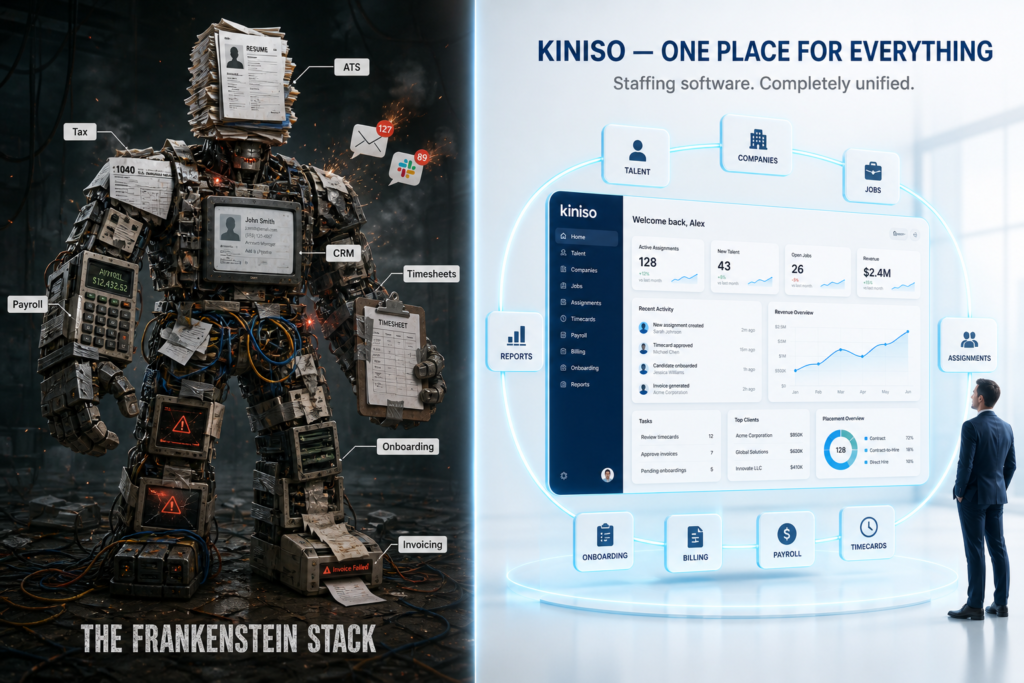
Q: What makes KinISO different from legacy staffing software? A: Many older platforms still use server farms and remote desktops, which cause lag and freezing. KinISO uses modern cloud infrastructure and Kubernetes for a faster, more reliable experience.
Q: Why did it take so long to go from a “scratchpad” to a launch? A: The primary challenge was that the necessary technology—specifically advanced cloud computing and rapid environment configuration—didn’t exist yet in the late ’90s.
Q: When did KinISO officially launch? A: KinISO officially entered the market and began signing up clients in December 2025.