Sales call blocks sound simple.
Put an hour on the calendar. Pull up a list of prospects. Start dialing.
That works, in theory. In practice, it’s how a lot of staffing sales call blocks turn into 20 minutes of calling and 40 minutes of researching, updating records, hunting for phone numbers, rereading old notes, and deciding who to call next.
The problem isn’t the calling. The problem is trying to decide what to do while you’re supposed to be doing it.
A staffing firm that treats prospecting as an afterthought — squeezed between client fires and candidate no-shows — ends up with a feast-or-famine pipeline. A call block only fixes that if it’s actually protected: booked like a client appointment, not a placeholder for whenever the day allows it.
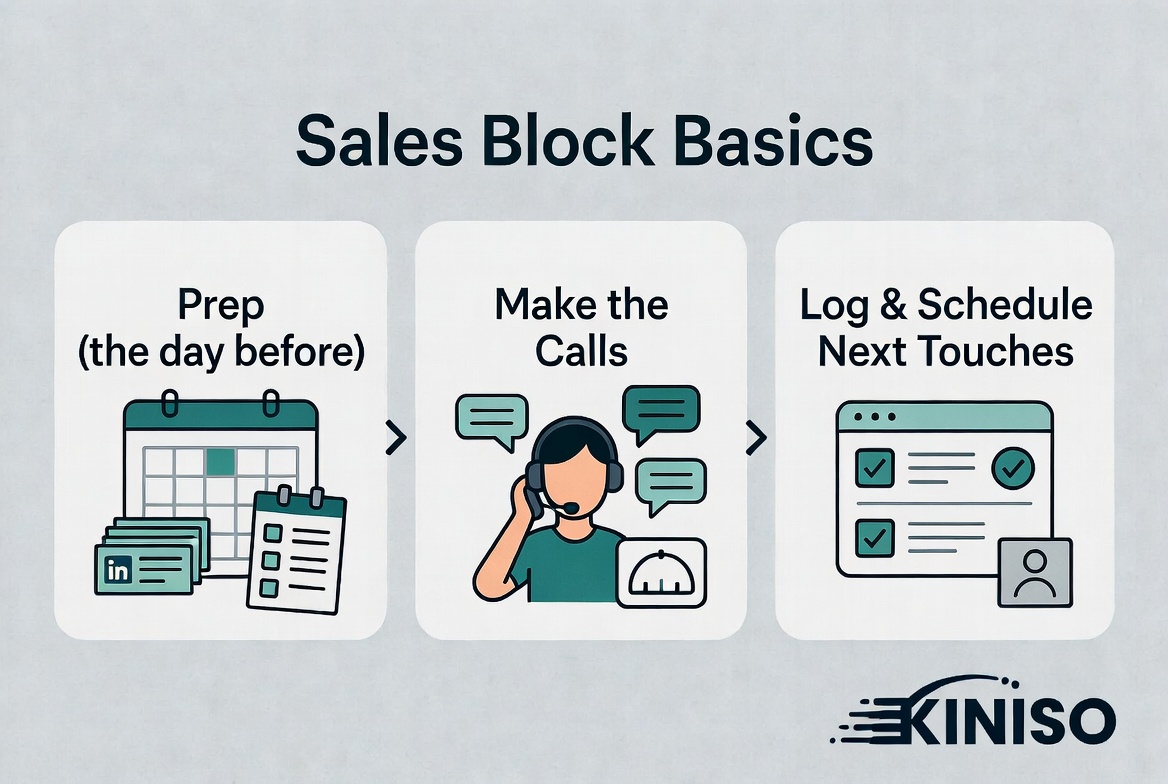
A good call block has three parts:
- Build the call deck.
- Make the calls.
- Use those calls to create the next call.
The preparation takes a little time up front. It’s also what makes the actual selling faster.
1. Build Your Call Deck Before You Start Calling
Don’t start a call block by opening your CRM and asking yourself who you should call. That decision should already be made.
Before the block begins, build a deck of the companies and people you intend to contact. It doesn’t need to be complicated — company, contact, number, and enough information to know why you’re calling.
The important part is having a reason.
Maybe they have jobs posted. Maybe you placed someone there three years ago. Maybe you know they use contract workers. Maybe someone at another branch has already worked with them. Maybe they just hired a new HR leader. Maybe you drove past the building yesterday and remembered you’ve never called them.
None of these reasons need to be brilliant. They just need to be better than “I was calling to see if you have any staffing needs.”
Think about how you group the deck, too. Twenty-five completely unrelated companies means resetting your brain on every call. Twenty-five companies with similar jobs, industries, or problems gets easier as you go — by the fifth or sixth call, you’ve heard the objections, you know what’s working, and you’re selling instead of improvising.
If you’re calling manufacturers, build a manufacturing block. If you’re calling companies with open accounting roles, build an accounting block. If you’re working a geography, work that geography.
2. During the Call Block, Make Calls
This sounds obvious. It isn’t.
The purpose of a call block is to make calls. Not research. Not clean up the CRM. Not write the perfect follow-up email. Not spend eleven minutes on LinkedIn learning where the VP of Operations went to school.
You prepared so you could move. Call. Leave the voicemail. Write the note. Move to the next one.
When someone answers, have a conversation. Staffing sales gets overcomplicated because people think they need a perfect pitch — but most prospects aren’t buying because you delivered 45 seconds of polished positioning. You’re trying to learn something:
Do they use staffing? What positions cause them trouble? Who manages those vendors? Are they hiring? Are they unhappy with anything? Do they have seasonal demand? Are you even talking to the right person?
You’re looking for information that changes the next action. That’s what makes a “no” useful. “We don’t use staffing firms” tells you something. “We already have three vendors” tells you something. “Call me in September when production picks up” tells you something very valuable.
Not every call needs to become an order. Every call needs to move the account forward — and you make a lot more of those calls when you’re not stopping after each dial to figure out what’s next.
3. Use This Call Block to Create the Next Call
This is the part that gets missed.
The best outcome from a sales call is often another sales call — not “I’ll follow up sometime,” but an actual next step. “Would Tuesday morning work?” “You said your busy season starts in September — how about the second week of August?” “Let me send that over. Can we talk again Thursday once you’ve looked at it?”
A cold prospect gets slightly warmer every time you have a legitimate reason to talk again. That matters in staffing because timing matters more here than almost anywhere else. A company with zero need today can desperately need five people three weeks from now. You’re not trying to predict exactly when that happens — you’re trying to stay close enough to be there when it does.
That means your call block should produce tomorrow’s call deck. Some prospects go back into the general pool. Some get a callback next week. Some get a specific appointment. Some need information sent first. Some turn out to be dead accounts and should stop taking up your time. Occasionally, someone has a job order right now — that’s the payoff, but it’s not the whole system.
The system is turning a large group of strangers into a smaller group of people you’ve spoken with, then turning those people into a smaller group you have a real reason to speak with again. Over time, your blocks shift — less time on cold prospects, more time on people who recognize your name. That’s how a pipeline actually gets built, not through a single great pitch but through a repeatable habit.
Make the Block Non-Negotiable
None of this works if the block isn’t protected. Pick your best energy window, put it on the calendar, and treat it like a client meeting — not something that gets bumped for the first fire drill of the day.
Track dials and conversations, not just placements. Early on, activity is the metric that tells you whether the system is working, long before it shows up in revenue.
Preparation Is What Creates Speed
People resist preparing for sales calls because preparation feels slower than dialing. It’s usually the opposite.
Preparation removes decisions. You already know who you’re calling. You already know why. You already know what you want to learn. And when the call ends, you already know what happens next.
That’s what lets a salesperson actually do the job a call block was built for: sell.
A little preparation doesn’t slow your calls down. It’s what makes you faster.
FAQ:
How long should a staffing sales call block be? Sixty to ninety minutes is enough to build momentum without burning out your energy for the day. Shorter blocks tend to get eaten by setup and reset time before you find a rhythm.
What should I track during a call block besides placements? Dials and real conversations. Placements are a lagging indicator — activity tells you whether the habit is working long before revenue does.
Should I multitask during a call block — check email, Slack, respond to clients? No. The block only works if it’s protected. Mixing in other work turns it back into the scattered, low-output prospecting it was meant to replace.